The people who did the work
First, and most of all, thank you to the scientists, scholars, theologians and many others, named in these episodes and not, who did the hard work over centuries: building up what we know, tacking and gybing when the course needed correcting, and bringing us to a place where our understanding of the Earth is richer and deeper than ever before.
Geology and the Earth sciences are still very much alive. There is so much more to learn about the complex and wonderful planet we live on.
Jane
Jane has heard every episode before anyone else, usually more than once, in long conversations over coffee, walking in the park and riding our bikes. She reviews every script, in order, from the Introduction to the end. Her notes, and a few audio problems of my own, sent me back to re-record the Introduction and the first three episodes. Every episode since has gone the same way: her review, my edits, then the microphone.
Every one of them is clearer for her questions. She also reads Marie Tharp. It would not have been possible without her. There is more about her part in this on the About page.
The voices
The historical quotations are read by people, cast by accent and era. Who they are, and how I found them, is on the About page.
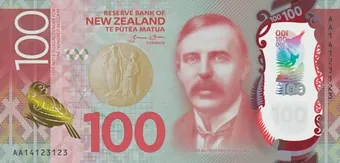
A special thank-you to John Cowan in New Zealand: scientist, writer and broadcaster. He recorded Rutherford's seven words for nothing, sent eight takes to choose from, and wrote back to point out that Rutherford is on New Zealand's hundred-dollar note. We have stayed in touch. The kindness of a stranger on the far side of the world is a lovely thing to find in the middle of a project like this.
Museums, libraries and archives
The pictures on these pages come from museums, libraries and archives that keep their collections open to everyone, and from the volunteers who photograph and scan for them. Every image is credited where it appears. These are the people behind them, and I am grateful to every one.
With their permission and help
The Alfred Wegener Museum in Zechlinerhütte and the town of Rheinsberg, who let us show the basket from Alfred and Kurt Wegener's record balloon flight of 1906 and sent photographs from its collection. Its catalogue is on museum-digital.
The Geschichts- und Heimatverein Laufachtal, the local history society of Laufach, where the Wegener brothers' record flight came down in April 1906. Its page on the landing helped with Episode 4, and its chairwoman kindly put me right about a photograph.
Museums and collections
Wellcome Collection, London: Abraham Werner and Lord Kelvin.
Library of Congress, Washington: the frontispiece of Thomas Burnet's Telluris Theoria Sacra, and Ernest Rutherford.
Royal Museums Greenwich: George Airy.
The National Trust, Hatchlands Park: Archbishop Ussher.
Science History Institute, Philadelphia: Francis Aston's first mass spectrograph.
Bildarchiv Foto Marburg: Alfred Wegener.
St Petersburg State University Library: Wladimir Köppen.
Libraries and open publishing
The Internet Archive, and the University of Toronto Libraries, whose scans put the English edition of Suess's The Face of the Earth online for anyone to read.
Andean Geology and Sharad Master, whose open-access paper brought Alexander du Toit's 1923 photographs of the Transandine Railway back into the light.
Wikimedia Commons
Wikimedia Commons, and the photographers who share their work there under open licences: Anne Burgess, James St. John, Kevmin, Bahudhara, MrQuin84, Dolores Coullie and Jackaranga, and Bammesk, who restored the portrait of Rutherford.
More will join this list as the later episodes are illustrated. If your collection appears here and you would like the credit worded differently, or would like to tell me more about the object, please write to me at michael.goddard@theslowmachine.com.
How it started
I only recently began dabbling in podcasting. My first show, Bimshire and Beyond, is about Barbados, and while working on it I bought Bob Speed's two books on the island's geology, which became two episodes about how Barbados was made. Somewhere in that reading a bigger idea took hold: not only how my island came to be, but how anybody came to know. I ran with it.
It draws on a lifetime of things: growing up on a small island, travel, reading, more reading, and a good deal of curiosity.
Two quotations that turned out not to exist
Two of the quotations that nearly went into these episodes are fabrications, and catching them is the single most useful thing that happened during the writing.
The first was attributed to Goethe, and arrived in a set of research documents. It could not be found in any edition or scholarly citation of his work. It is not used.
The second was a sentence attributed to Arthur Holmes — that speculative ideas "can have no scientific value until they acquire support from independent evidence" — which reads exactly like something Holmes would say, and is echoed in paraphrase across secondary sources. It is not in the 1931 paper. The full text was obtained and checked, and the sentence is not there, nor anywhere else he published. It was replaced with two verified lines from that paper's actual conclusion.
The lesson of the second one is noteworthy: a quotation that everyone paraphrases is not thereby attested, and a search engine will happily hand back a plausible sentence if you put one in the query. Hence the sourcing table on every episode page, and a rule that nothing unverified is ever read aloud by a guest voice.
The standard we ended up with
For Episode 8 we wanted a passage in which J. Tuzo Wilson describes changing his mind about continental drift. Nothing verifiable could be found in open sources: the 1965 Nature paper, the 1968 Proceedings and the memorial volume are all behind paywalls, and a web search offered a plausible-sounding opening paragraph "based on the information available", which is the exact pattern that produced the Holmes sentence. The episode went without a guest voice until a copy of "Static or Mobile Earth: The Current Scientific Revolution" was obtained, the passage verified against the PDF, and then checked by eye against the page image. Page number and all.
The balloon with no sound
Episode 4 has Alfred Wegener in a balloon, and the first sound design for it included a burner. It was wrong. Wegener's balloon was filled with hydrogen: no burner, no roar, nothing but wicker, rope and wind. The audio file was deleted and the silence kept, because the silence is the point.
Numbers, measured rather than assumed
The whole series was planned at 150 words per minute, which turned out to be a guess and a bad one. The first recorded episode came in at 2,320 words in 13 minutes 58 seconds: 165 words per minute. Every runtime estimate since is built on that measurement.
The episodes are mastered to −16 LUFS rather than the −14 the streaming platforms prefer. The series contains 174 scripted pauses, and they are worth more than two decibels.
Made at home
Every episode was recorded in my home studio. A special thank-you to two musician friends, Marty Johnson and David "Wally" Wallerson, who helped me find my way around Logic Pro and get the sound right. They were also among the first to hear the trial recordings, and their feedback shaped how every episode since has sounded. I may well come back to music-themed projects of my own one day.
A learning curve
A series like this turns out to be a great many jobs: reading books and research papers, writing scripts, getting feedback and reworking them again and again, recording and mixing, writing prompts for the music, making the artwork, building this website, setting up the RSS feed, and opening channels on Spotify, Apple, Amazon and YouTube. Most of it I had never done before.
Claude Code, an AI assistant, helped me push through all of it — research, drafting, fact-checking and the technical plumbing — and get from ideas to something real. It did not do the voices; those are all people. So thank you to the real people, and to the AI minions, who helped along the way.