The Slow MachineBefore the Question
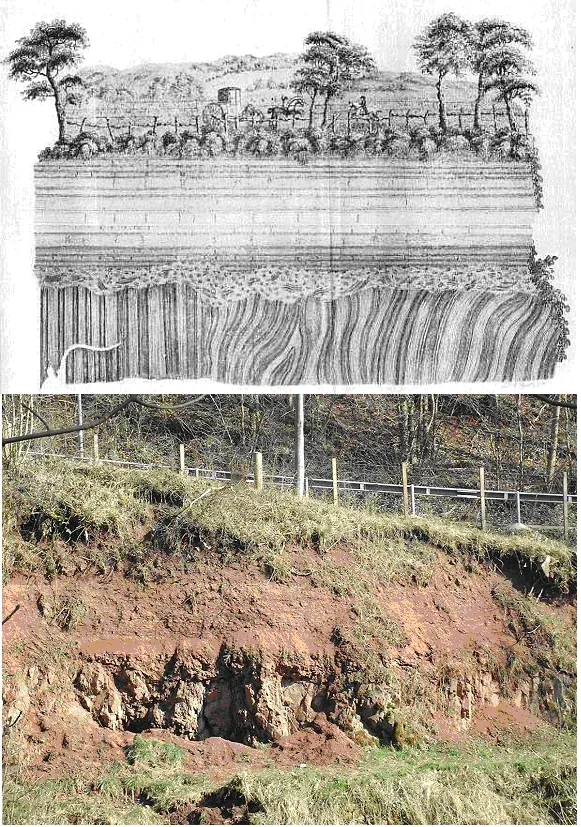

Somewhere on the coast of Britain, in the summer of 1788, three men in a small boat are looking at a cliff.
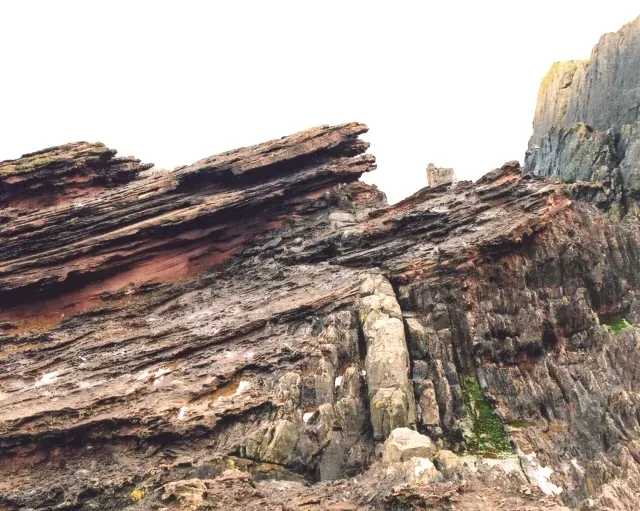
What they are looking at is not beautiful. It's a mess. One set of rock layers standing almost vertically, like books jammed upright on a shelf — and lying flat on top of them, a completely different set, running horizontally, as though someone had laid a stack of planks across the books and walked away.
One of the three, a Scottish farmer and physician named James Hutton, looks at that junction and understands what it must mean. Those upright layers were once flat, at the bottom of a sea. Then they were buried, tilted, hoisted up into mountains, worn down flat by weather, sunk under a sea again, and buried again.
Not one lifetime. Not one flood. A whole cycle of the world, and then another one on top of it — and no reason to think either was the first.
His friend John Playfair was in the boat beside him, watching him work it out. What Playfair wrote afterwards about that afternoon is the best sentence anybody has ever written about geology — and you will hear it at the end of this episode.1
1 · ParaphrasedPlayfair — cold open, "the mind seemed to grow giddy"Playfair, Biographical Account of James Hutton, 1805
That's where this series ends up. But it is not where it starts.
Because to understand how strange that moment in the boat was, you have to understand what it felt like to live in a world where nobody was asking that question at all. The question being: what put those two sets of rock there, one standing on end and the other lying flat across the top of it — and how long did that take?
This is The Slow Machine — the story of how we worked out that the ground under your feet is moving, and how long it took, and how nearly everyone got it wrong along the way. I'm Michael Goddard.
Episode one: before the question.
§ I
Every Culture Had an Answer

Let's start with something that's easy to get wrong.
For most of human history, in most places on Earth, people had an explanation for what the world is and where it came from. Not an absence of an explanation — an actual, detailed, internally consistent one. And those explanations were doing real work: they told people their place under the stars, and their relationship to the ground beneath their feet.
Among the Haudenosaunee — the people European settlers called the Iroquois — the world is Turtle Island. A woman falls from the sky; the animals of the water dive down into the deep and bring up mud, handful by handful, and pack it onto the back of a great turtle, and the turtle's shell becomes the land. It's a story about the world being built up out of the water, by cooperation, on the back of a living thing that is still there underneath you.
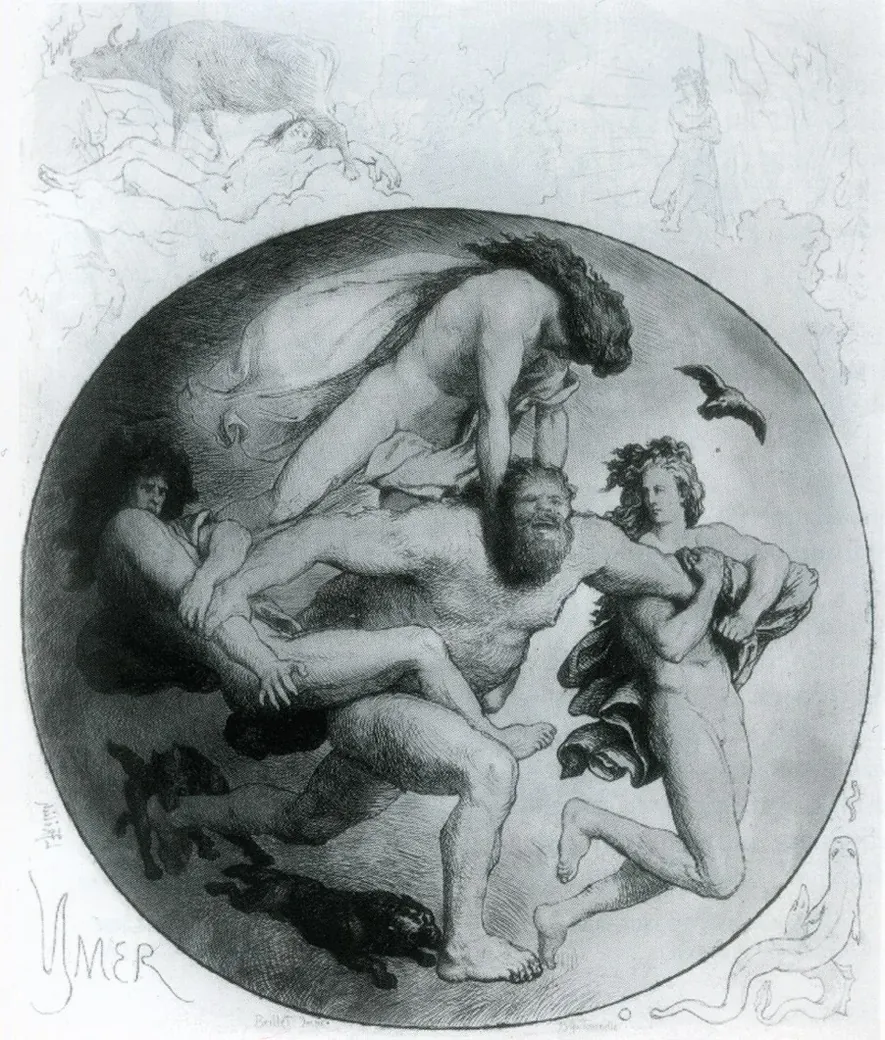
In Norse cosmology, the world is a body. The gods kill the primordial giant Ymir, and they use him. His flesh becomes the soil. His bones become the mountains. His blood becomes the sea that rings the world. You are living on a corpse, and the mountains are its skeleton showing through.
Among the Aztecs, the world was made from a monster — Cipactli, part crocodile, part fish, part toad, torn apart by the gods. Her back is the ground. Her mouth is the caves. The ridges of her body are the mountain ranges.
In the Hindu tradition, the Earth sits at the centre of a cosmos running in cycles so long they are counted in billions of years — creation, destruction, rebirth, over and over, without beginning.
In the Andes, the Earth is not a thing at all but a person: Pachamama, alive and conscious, who shakes when she is angry.
Now. Here's the thing I want you to notice, because it matters for everything that follows.
Look at what these stories are doing. None of these traditions treated the Earth as an inanimate backdrop. To them, the world was an intensely alive, conscious space — whether it was a person like Pachamama, a living foundation like Turtle Island, or the remains of a giant whose flesh, bones, and blood became the soil, mountains, and seas.
They weren't trying to explain whether there are mountains — everyone can see there are mountains. They were explaining what mountains are. Bones. Ridges on a monster's back. Mud piled on a turtle's shell.
Every single one of these cultures had noticed the exact same thing: that the surface of the world has structure. That it isn't smooth. That something happened to it.
They just didn't have a way to interrogate the landscape that would yield a different answer than the one they started with. A myth can be profound, but it can't give you measurable evidence. You can't take Ymir's skeleton out into the field and run a test on it.
That's the core shift this series is about. Not clever people replacing ignorant people. But people who were satisfied with narrative answers, replaced by people who were obsessed with physical questions — and, crucially, had the instruments to test them.
§ II
The Man Who Knew the Date

So let's go into a European study in the middle of the 1600s, and meet a man doing something that looks, at first glance, absolutely absurd.
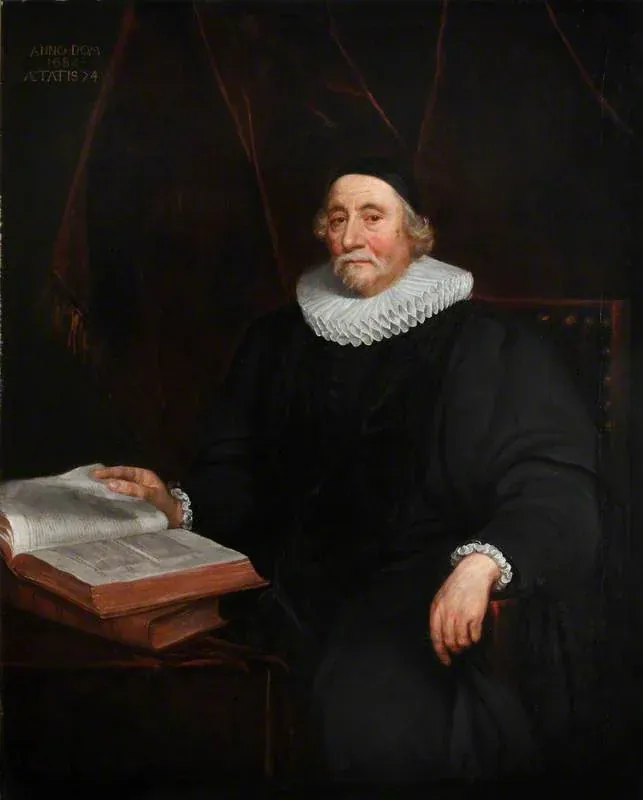
James Ussher was the Archbishop of Armagh — one of the most learned men in Ireland or England, a serious scholar of ancient languages with a library most universities would have envied. And in 1650 he published a chronology of the world, worked out by reading the genealogies of scripture backwards and cross-referencing them against Persian, Babylonian and Roman records, tying the whole thing to the astronomical calendar.
He did not arrive at a vague answer. Listen to how precise it is.
James Ussher, 16502From the beginning of the world to the beginning of the month of Tisri, in the year of the Julian Calendar 710, there are computed four thousand and four years... that the beginning of time... fell upon the entrance of the night preceding the twenty-third day of October.
2 · VerbatimAnnales Veteris Testamenti, 1650
The world began on a Saturday evening, in October, 4004 years before Christ. Not the year. The evening.
It is very easy to laugh at that. Please don't, yet — because the reason it's interesting is that Ussher wasn't being sloppy. He was being rigorous. He applied genuine scholarly discipline, real linguistic expertise, and careful arithmetic to the best sources he believed existed. The method was sound. The sources were the problem — scripture read as a chronicle, and genealogies that were never meant to be a calendar.
And the consequence of Ussher's number was enormous, because it set the size of the box. If the entire history of the world is about six thousand years long, then the formation of every canyon, every mountain range, every layer of rock in every cliff on Earth has to fit inside six thousand years.
And you cannot do that gently. Six thousand years is not enough time for a river to carve a gorge. So if the gorge is there, something must have carved it fast. Something violent. Something enormous.
That way of thinking has a name: catastrophism. The idea that the surface of the Earth was shaped by a small number of sudden, colossal events rather than by slow, ordinary processes.
And for a couple of centuries, catastrophism was not a fringe position. It was simply what the landscape looked like if you knew, for certain, that you only had six thousand years to play with.
§ III
Walking on the Ruins

Which brings us to a book that was, in its day, a genuine bestseller — and one of the strangest things ever written about the planet.
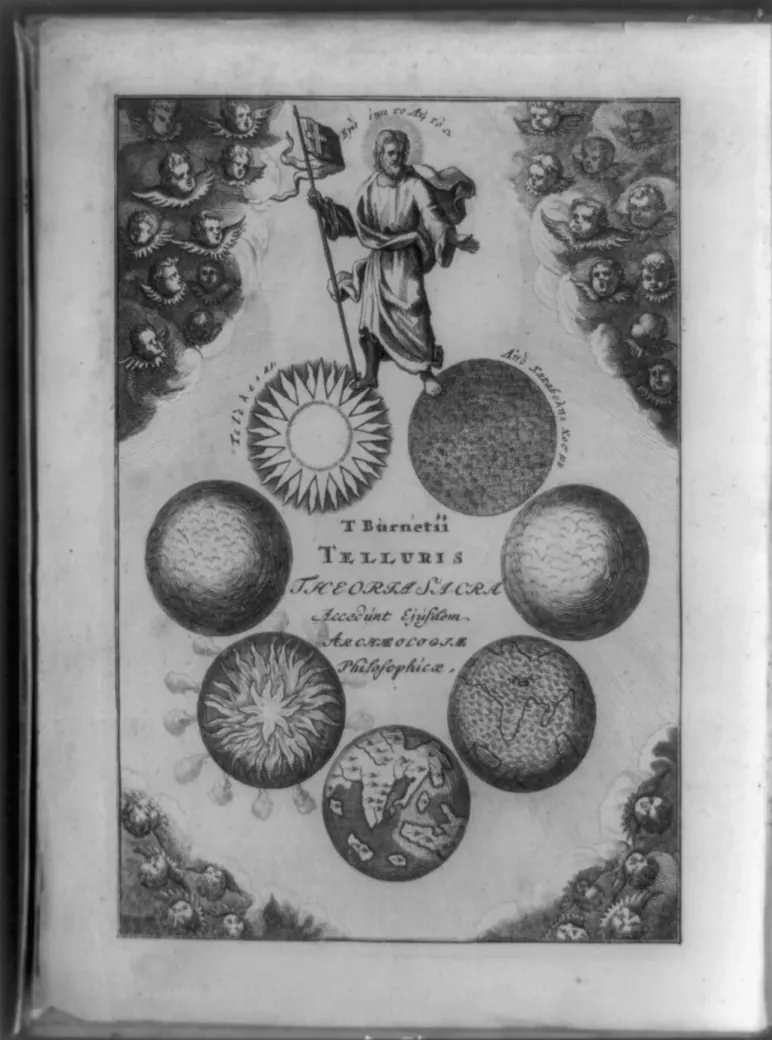
In 1681, an English clergyman named Thomas Burnet published The Sacred Theory of the Earth. Burnet was a man standing squarely on the fault line of a changing world. He was a devout believer, but he was also writing at the dawn of the Scientific Revolution — a moment when thinkers were beginning to view the universe not as a series of divine interventions, but as a giant, clockwork machine governed by natural law.
Burnet wanted to explain the Bible, but he refused to use miracles to do it. No sudden acts of magic. No supernatural water appearing out of nowhere for Noah's Flood. It had to be physics. Mechanics. Fluids, heat, gravity, and thermal expansion.
And through pure, armchair deduction, Burnet built a radical mechanical model for how the planet worked.
His argument was that the Earth had originally been made perfect — and by perfect, he meant mathematically smooth. A flawless, symmetrical sphere with no mountains, no valleys, and no ocean basins. A delicate shell of land wrapped over a subterranean ocean, like an eggshell.
And then, that shell cracked. Baked by the sun, building up internal steam, the crust ruptured and collapsed inward. The inner waters surged out in a catastrophic flood, and the jagged, broken fragments of that collapsed shell were left sticking out at odd angles.
Thomas Burnet, 16813We have still the broken Materials of that first World, and walk upon its Ruines... when it fell, it made the Deluge; And this unshapen Earth we now inhabit, is the Form it was found in when the Waters had retir'd, and the dry Land appear'd.
3 · VerbatimThe Sacred Theory of the Earth, 1681
Listen again, and notice the emotional temperature of it. Broken materials. Ruins. Unshapen.
Burnet is not describing scenery. He's describing a demolition site.
When Burnet crossed the Alps on his Grand Tour of Europe, he had a visceral, conflicting reaction that rumbles through every page of his book. On an intellectual level, he was horrified. To a mind obsessed with Cartesian geometry and divine order, these jagged piles of rock were ugly deformities — gaping scars on a fallen planet.
Yet, as he stood in their shadow, he couldn't look away. He was overwhelmed by their scale. He called what he saw "wild, vast, and indigested heaps of stones and earth" — and in the very same chapter admitted that mountains inspire the mind with "great thoughts and passions." Burnet was one of the first writers to wrestle with what we now call the Sublime — that terrifying, awe-inspiring realisation that you are standing in the presence of something vast, ancient, and utterly indifferent to you.4, 5
4 · Verbatim fragmentBurnet — "wild, vast, and indigested heaps of stones and earth"Sacred Theory, Bk I ch. XI, "Concerning the Mountains of the Earth"
5 · Verbatim fragmentBurnet — "great thoughts and passions"Sacred Theory, Bk I ch. XI — same chapter as the above
He resolved that tension the only way he knew how: the Alps were magnificent, yes, but they were magnificent because they were a catastrophe. They were the majestic ruins of a shattered world.
Hold onto that, because Burnet's dynamic, broken world marks a massive turning point. Before him, the Earth was mostly static — a fixed stage built by God on day one and left unchanged. Burnet introduced a dangerous new idea: that the Earth has a physical history. That it changes over time through natural forces.
Two hundred years later, Victorian geologists would look at those same mountains and also see them as a symptom of a dynamic, violent planet — just with the biblical narrative stripped away and rigorous physical field data put in its place.
The theology would fade. But the realisation that the ground beneath our feet is a scarred, shifting wreckage? That idea was here to stay.
§ IV
The Shells on the Mountain

So far, everything we've talked about is a grand narrative designed to explain the world.
Now here comes the first crack in those narratives — and it comes not from a better story, but from a small awkward object that would not fit into any of them.
Seashells. Embedded in rock, miles above sea level, on the tops of mountains.
People had been finding them for centuries, and they were, frankly, an intellectual nuisance. There were plenty of convenient explanations. The church establishment said they were leftover debris from Noah's Flood, stranded when the waters receded. Others claimed they weren't shells at all, but inorganic rocks moulded into shell shapes by mysterious "plastic forces" inside the Earth — a decorative accident of nature.
Enter Robert Hooke — one of the most brilliantly inventive, and most deeply irritable, men in the history of science.
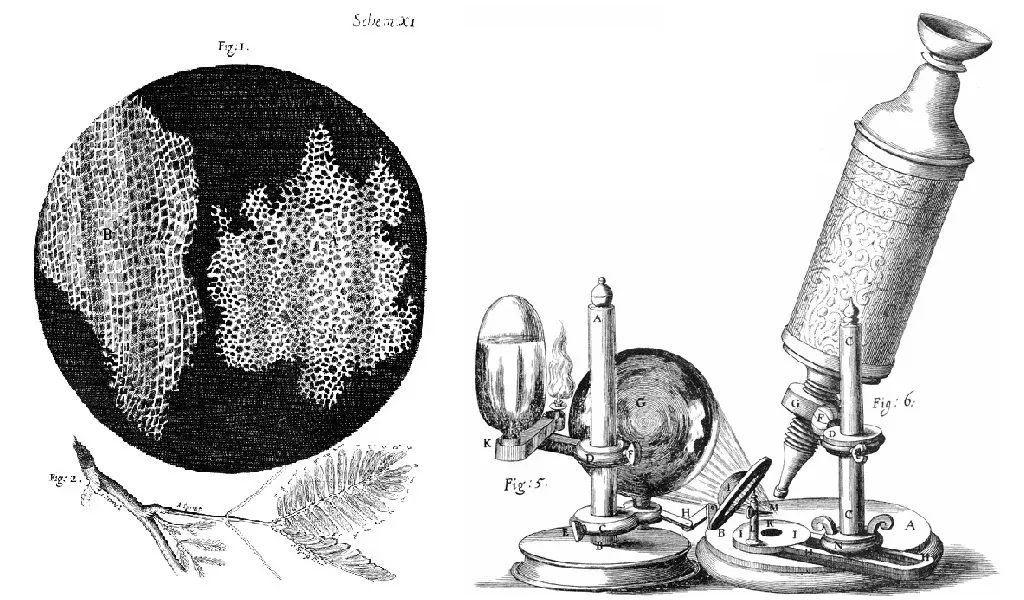
Hooke was the ultimate tinkerer. He was the Curator of Experiments for the Royal Society, a man who designed precision balance springs, surveyed London after the Great Fire, and built his own instruments when existing tools weren't good enough. To solve the riddle of the rocks, Hooke constructed an advanced compound microscope. He built a custom two-lens barrel, and when the images came out too dark, he invented a condenser system — focusing an oil lamp through a globe of water to blast his specimens with concentrated light.
Then, Hooke did something almost nobody had thought to do: he put the fossils under magnification.
He took a piece of petrified wood and placed it right beside a slice of fresh, living tree cork. Under his lens, the "rock" vanished. Hooke saw the exact same porous, honeycomb-like microstructure in the fossil that he saw in the wood — the tiny chambers he famously named cells. He did the same with fossilised sea shells.
Under magnification, the "accident of nature" theory collapsed. These weren't rocky imitations. They were the original tissues themselves — once living, now mineralised atom by atom into stone.
Which raised a much harder, far more dangerous question: How on Earth did a creature from the bottom of the ocean end up buried inside a peak in the Alps?
Hooke's answer was dynamic force. He proposed that seismic activity could heave the ground up wholesale — that ancient sea beds could be pushed up into dry land, and mountains thrust into the sky where plains used to be. In his words, earthquakes could "transpose, convert, subvert, and jumble" the parts of the Earth together over time.6
6 · Verbatim fragmentHooke — "transpose, convert, subvert and jumble"Discourse of Earthquakes
And then Hooke took one step further, and said something that, in the late 1600s, was close to unthinkable.
He had been examining fossil ammonites — beautiful, coiled shells common in English limestone. He painstakingly compared their microscopic structures with every known living shellfish on Earth. And he couldn't find a match. Not for these, and not for scores of other fossils he was examining.
Robert Hooke, 17057There have been many other Species of Creatures in former Ages, of which we can find none at present; and that 'tis not unlikely also but that there may be divers new kinds now, which have not been from the beginning.
7 · VerbatimDiscourse of Earthquakes, pub. posthumously 1705
Species that existed and are gone. Species that weren't there at the start and are here now.
That is extinction, and something very close to deep-time ecological change, written down a hundred and fifty years before Charles Darwin — by a man who got there just by looking carefully at rocks and refusing to accept a comfortable answer.
Hooke also said something else, which I love, about what fossils actually are. He said they are records. He realised that a fossil shell embedded in a layer of limestone tells a naturalist where the ocean used to be, what lived there, and how the landscape shifted — far more reliably than an ancient coin tells a historian about a fallen empire.8
8 · ParaphrasedHooke — archive/coins passageDiscourse of Earthquakes
In Hooke's view, these fossils were historical documents, written in plainer letters than Egyptian hieroglyphs, on materials far more durable than the pyramids.
The Earth, he was telling us, is not a static stage, nor is it a mystical mystery. It is an archive. And if you have the right instruments, and insights, you can actually read it.
§ V
Water or Fire

By the late 1700s, the shells on the mountain had done their damage, and something recognisable as geology was underway. And immediately it split into two hostile camps arguing about the same question Hooke had raised: what is the force that shapes rock?
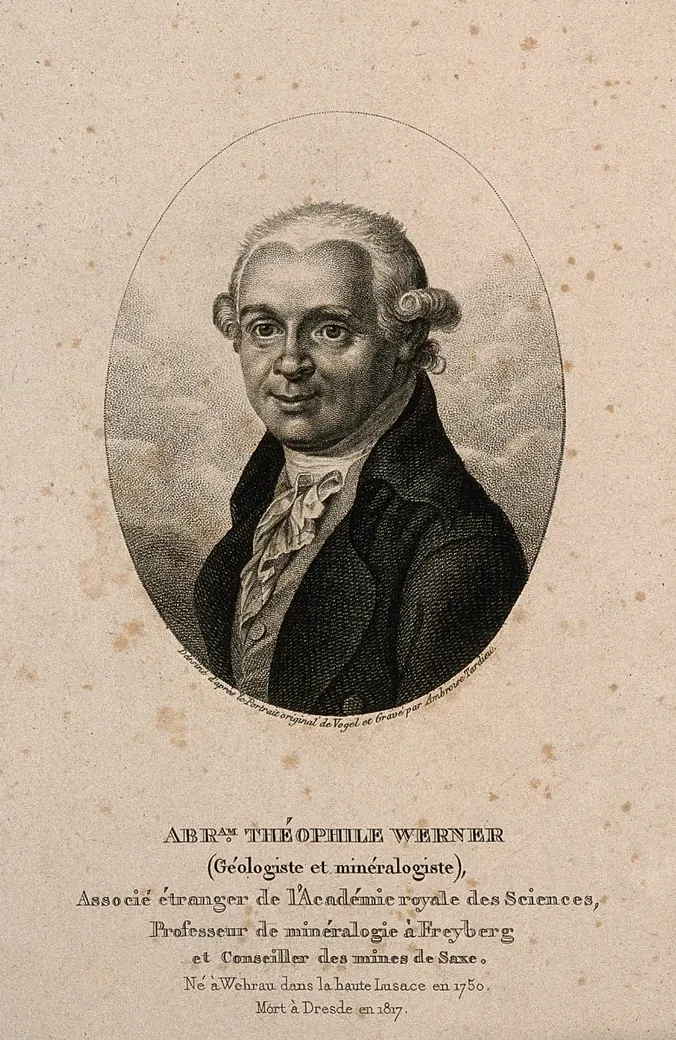
On one side, the Neptunists — named for the Roman god of the sea, and led by a hugely influential German mining professor, Abraham Werner. Their claim: essentially all rock, including granite and basalt, precipitated out of a single global ocean that once covered everything and has since receded. Rocks are sediment. The world was crystallised out of water, quietly, in order, from the bottom up.
On the other side, the Vulcanists or Plutonists — named for the gods of fire and the underworld. Their claim: some rocks were once molten. There is heat down there. Granite came up hot from below.
Now, we know how this ends. But at the time the Neptunist position was the respectable one, and it's worth understanding why, because it wasn't stupidity — it was temperament. A world made by settling water is orderly. Predictable. Calm. A world with fire underneath it is unstable and frightening.
You can see the appeal in who signed up. Johann Wolfgang von Goethe — poet, novelist, and a serious working naturalist — was a committed Neptunist, and he took it seriously enough to stage the entire argument as a scene in Faust, with two ancient Greek philosophers going at each other over whether mountains rose in violence or settled out in peace. Goethe's sympathies are with peace.
So this is the state of play as the modern era opens. Educated people are divided between a world crystallised out of a calm sea, and a world driven from beneath by heat.
And into that argument walks the man in the boat, sailing along the rocky coast of Scotland.
§ VI
The Abyss of Time

James Hutton was a Scottish physician who gave up medicine to farm, spent decades walking his own land, and worked out something so simple that it took a genius to notice it.
Hutton saw that his farm was losing soil. Rain washed it into streams; streams carried it to the sea. And Hutton realised: if that's happening here, it's happening everywhere. Every continent on Earth is being dismantled, grain by grain, and delivered to the ocean floor.
Run that forward, and eventually all the land is gone. Run it backward, and there shouldn't be any land to begin with. Neither is true. So something must be putting the land back.
That something, he realised, was heat — a deep, internal engine inside the Earth baking loose sediment into hard stone, and raising it back up into daylight, where the rain starts the process all over again.
And he had seen the evidence for himself. Three years earlier, in Glen Tilt in the Highlands, he had found granite forced up into much older rock — veins of it cutting clean across the layers and carrying broken fragments of them along. Granite cannot do that unless it was once molten. Whatever was down there had been hot enough to flow. Not a one-off creation. Not a single biblical catastrophe. A dynamic, continuous cycle. Destruction and renewal, over and over, indefinitely.
In the summer of 1788, Hutton hired a boat to look for physical proof of this engine on the cliffs of Siccar Point. And when he stepped ashore, he found it.
There, on a sea-swept cliff, was a layer of ancient grey schist — tilted completely vertical, like books on a shelf. And lying directly on top of it, perfectly flat and horizontal, were beds of red sandstone.
Hutton stood there and mapped out what that boundary actually meant.
For those bottom rocks to be standing upright, an ancient sea floor had to be buried, turned to stone, tilted vertically by heat, uplifted into mountains, eroded completely flat by water, submerged again to collect new red sand, and then lifted out of the ocean a second time.
Two entire cycles of continental death and rebirth, stacked in a single wall of rock.
When Hutton's companion, the mathematician John Playfair, looked at that cliff face, he later wrote that his mind felt "giddy by looking so far into the abyss of time."9
9 · Verbatim fragmentPlayfair — Part Six, "giddy by looking so far into the abyss of time"Playfair, Biographical Account of James Hutton, read 1803, pub. Trans. Royal Soc. Edinburgh 1805
James Hutton, 178810The result, therefore, of our present enquiry is, that we find no vestige of a beginning — no prospect of an end.
10 · VerbatimTheory of the Earth, 1788
That sentence is a door opening.
Because the moment you accept that the Earth operates on deep, vast, almost infinite time, catastrophism stops being necessary. You no longer need a flood to carve a canyon. You've just got a river and all the time in the world.
But notice what Hutton has also just done, quietly, almost as a side effect. He's said there is a heat engine inside the planet. Something down there is doing work. Something is putting the mountains back.
He had no idea what it was. He had no way to find out. Nobody would have a way to find out for another two hundred years.
And in the meantime, the nineteenth century was about to come up with a beautifully simple theory of what mountains are — a theory that would dominate the science for four generations, that explained almost everything, and that was completely, comprehensively wrong.
It involved a piece of fruit.
Next time on The Slow Machine: the shrivelling apple, an Austrian geologist with a four-volume masterpiece, and a small extinct reptile that could not swim — found on both sides of an ocean.
Every episode of this series has a page at theslowmachine.com — the full transcript, and a table of every quotation in it with the source it came from. If you would like to write to me, the address is michael.goddard@theslowmachine.com.
Apparatus
Quotations, and where they come from
1Playfair — cold open, "the mind seemed to grow giddy"Paraphrased on air — narrator says "later wrote that", no quote marksPlayfair, Biographical Account of James Hutton, 1805
2UssherVerbatim, standard English renderingAnnales Veteris Testamenti, 1650
3BurnetVerbatimThe Sacred Theory of the Earth, 1681
4Burnet — "wild, vast, and indigested heaps of stones and earth"Verbatim fragment, narrator-framed. Verified against the text: "the Sight of those wild, vast, and indigested Heaps of Stones and Earth did so deeply strike my Fancy"Sacred Theory, Bk I ch. XI, "Concerning the Mountains of the Earth"
5Burnet — "great thoughts and passions"Verbatim fragment, narrator-framed. Verified: "There is something august and stately in the Air of these things, that inspires the Mind with great Thoughts and Passions."Sacred Theory, Bk I ch. XI — same chapter as the above
6Hooke — "transpose, convert, subvert and jumble"Verbatim fragment, narrator-framedDiscourse of Earthquakes
7Hooke — speciesVerbatimDiscourse of Earthquakes, pub. posthumously 1705
8Hooke — archive/coins passageParaphrased on air — narrator says "he said", does not present as a quoteDiscourse of Earthquakes
9Playfair — Part Six, "giddy by looking so far into the abyss of time"Verbatim fragment, narrator-framed. Verified: "The mind seemed to grow giddy by looking so far into the abyss of time."Playfair, Biographical Account of James Hutton, read 1803, pub. Trans. Royal Soc. Edinburgh 1805
10HuttonVerbatimTheory of the Earth, 1788